



Ghee & Gut Microbiome:
Biochemical Benefits for Intestinal Health
From butyric acid to the intestinal barrier: the science behind Ghee's exceptional tolerability for those with dairy sensitivities and intestinal inflammation.
Why Ghee differs from butter:
the biochemistry of clarification
When we say Ghee is a superior functional food compared to regular butter, this is not marketing — it's biochemistry. The clarification process — gently heating butter and removing foam and sediment — profoundly transforms the product's composition, eliminating the most problematic components while concentrating the beneficial ones.
The result is a fat that is 99.8% pure lipids, with residual lactose below 0.01 g per 100 g (classifiable as "lactose-free" under EU regulations) and free from the main allergenic milk proteins, including caseins and whey proteins.
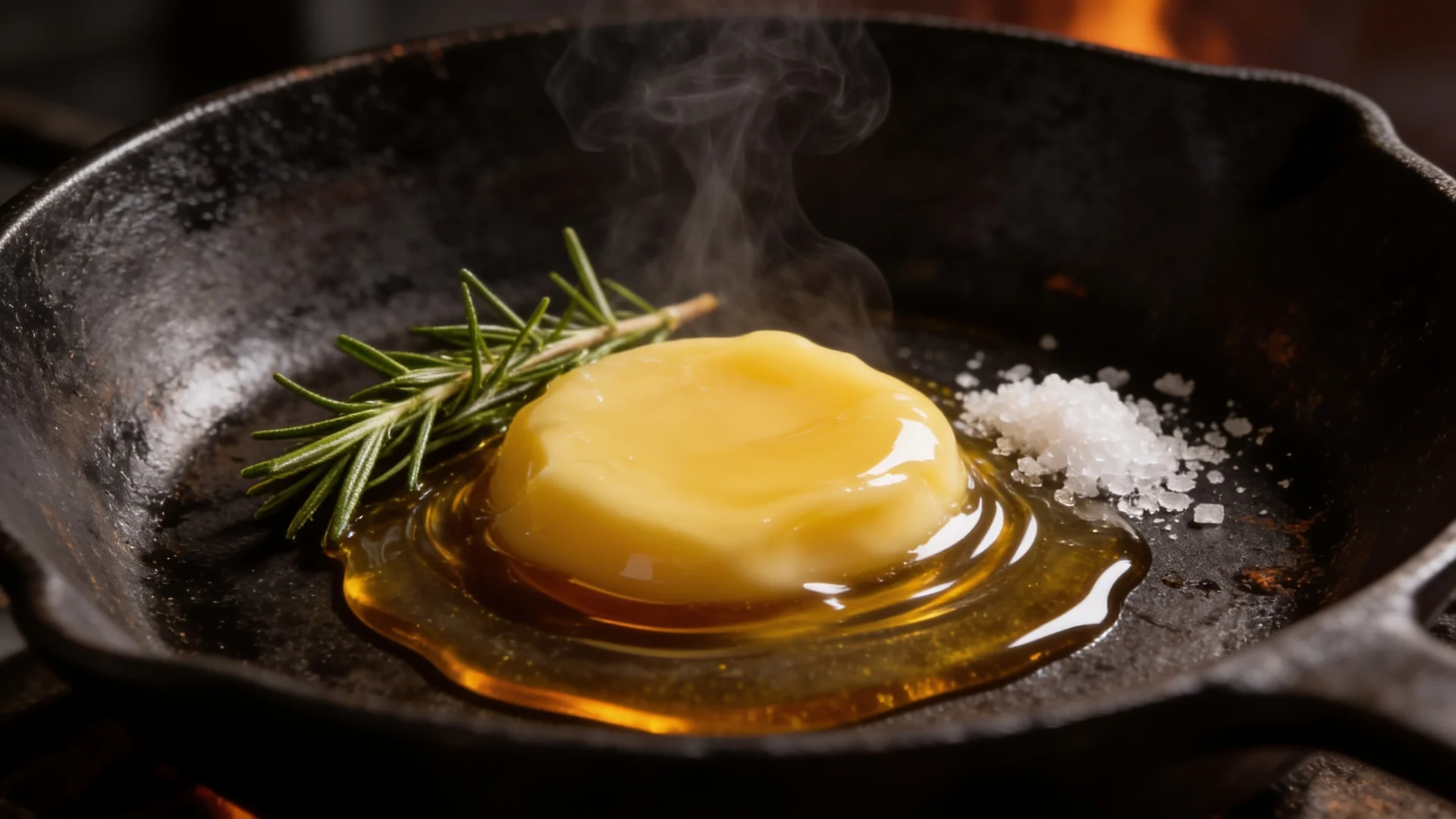
Butter vs. Ghee — Nutritional comparison
| Parameter | Regular Butter | Benvolio Organic Ghee |
|---|---|---|
| Lactose | 0.6–0.8 g/100g (problematic for intolerant) | ✓ <0.01 g/100g (trace) |
| Caseins | Present (up to 1.2 g/100g) | ✓ Absent — removed with foam |
| Smoke point | ✗ ~150 °C (burns, produces acrolein) | ✓ ~250 °C (stable at high temperature) |
| Lipid content | ~80–82% fat | ✓ 99.8% pure fat |
| Butyric acid (C4:0) | ~3.5% of fatty acids | ✓ ~3.5–4% (concentrated after clarification) |
| Shelf life | ✗ Short, requires refrigeration | ✓ Months at room temperature |
Butyric Acid: the colon's fuel
Among all Ghee's components, butyric acid (butanoic acid, C4:0) has received the most attention from modern scientific research for its effects on the microbiome and intestinal health. It is a short-chain fatty acid (SCFA) found naturally in butter and, concentrated, in Ghee.
🧬 Butyric Acid: what research shows
Butyrate is the preferred fuel of enterocytes — the cells lining the colon. Without adequate butyrate supply, the intestinal barrier weakens, increasing intestinal permeability (so-called "leaky gut").
- Provides up to 70% of energy to colon enterocytes
- Strengthens tight junctions of the intestinal mucosa
- Reduces production of pro-inflammatory cytokines (IL-6, TNF-α) in intestinal cells
- Regulates cell proliferation and apoptosis in the colon (protective effect)
- Modulates gut microenvironment pH, favouring beneficial bacteria (Lactobacillus, Bifidobacterium)
"Butyrate is the main epigenetic modulator in the colon: it influences enterocyte gene expression through inhibition of histone deacetylases (HDAC), with potentially protective effects on the mucosa."
— Hamer et al., 2008, Alimentary Pharmacology & TherapeuticsThe Fat-Soluble Vitamins in Organic Ghee
Ghee produced from certified organic grass-fed butter is naturally rich in fat-soluble vitamins — those that require fat to be absorbed. The lipidic nature of Ghee itself ensures optimal absorption of these vitamins even from a single tablespoon.
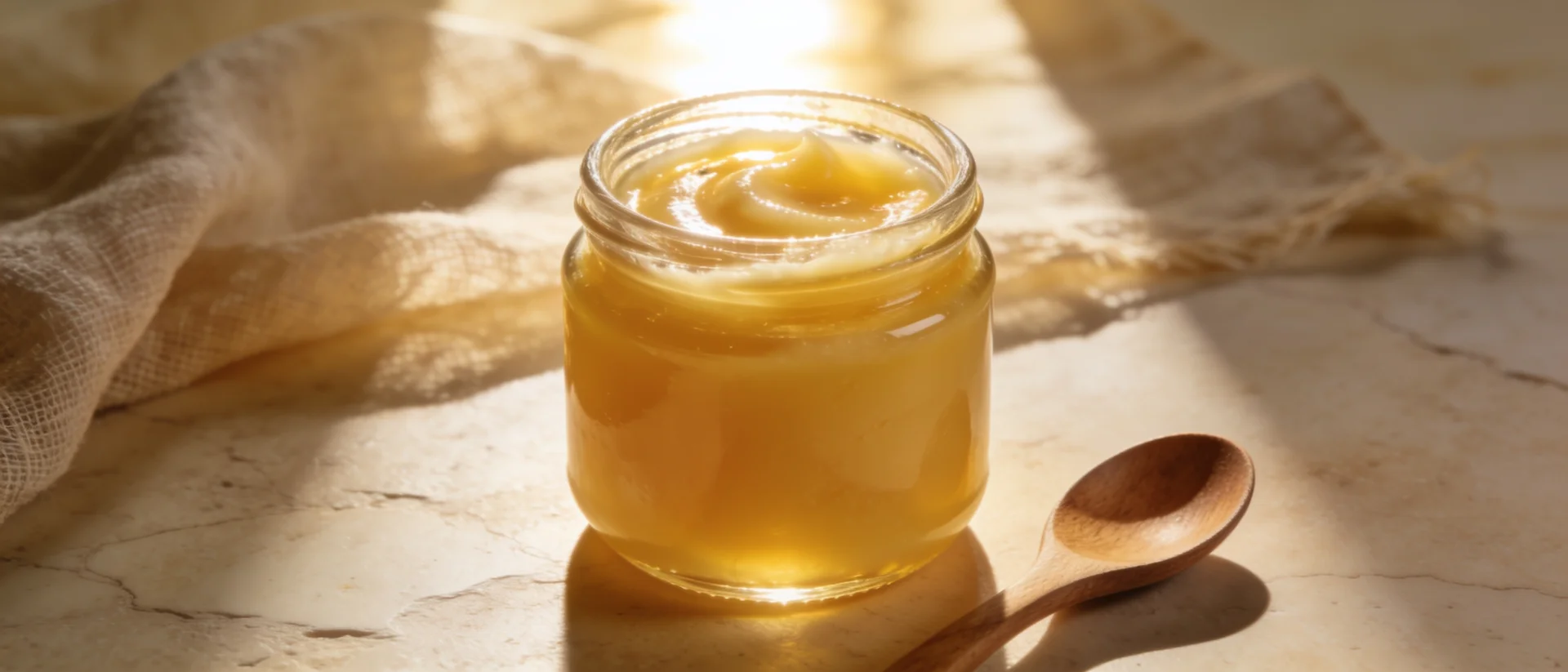
🫙 Benvolio Organic Ghee 200 ml
Lactose and casein free, rich in butyric acid and fat-soluble vitamins. Perfect for those who want dairy benefits without the issues. In an elegant reusable glass jar.
🛒 Buy Benvolio Organic Ghee