The Recipe's Oil Trio: Differences and Role of Each Oil
In the preparation of our velvety soup, each oil plays a distinct and irreplaceable role: they are not interchangeable, but work in synergy to balance texture, cooking performance, and aromatic notes.
The cooking foundation. The ideal choice for building the initial sauté base.
- Role in the dish: gently softens the onion and extracts the natural aromas of the vegetables in the pan without masking their flavor.
- Key strength: exceptional heat stability and an aromatic profile rooted in Mediterranean tradition.
The high-heat and crisping expert. Soft, round, and delicately fruity on the palate.
- Role in the dish: thanks to its exceptionally high smoke point, it is ideal for pan-toasting croutons until golden and crunchy without burning.
- Key strength: remarkable thermal resistance and naturally rich in beneficial monounsaturated fatty acids.
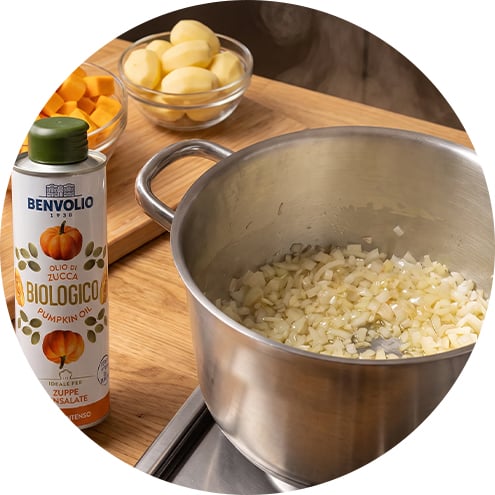
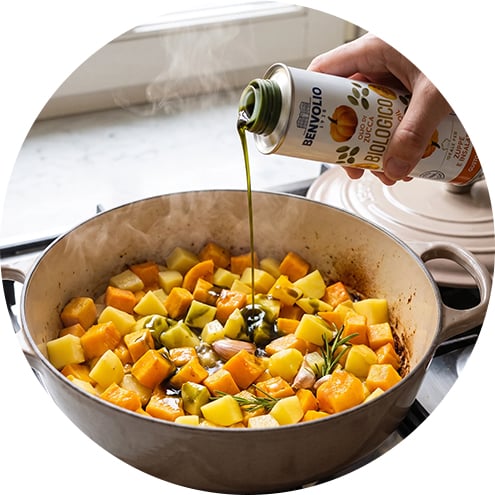
The raw aromatic and dramatic finishing touch. Deep forest-green color paired with an intense, toasted flavor profile.
- Role in the dish: strictly drizzled raw right before serving to create visual contrast and release unmistakable roasted notes.
- Key strength: natural source of phytosterols, zinc, and polyunsaturated fatty acids preserved intact without cooking.
Why use all three together?
Using them in combination respects the unique culinary strengths of each oil:
With the Extra Virgin Olive Oil, you build the savory depth and body of the dish; with the Avocado Oil, you achieve the ultimate crispiness for the croutons; and with the Pumpkin Seed Oil, you deliver the finishing gourmet swirl that transforms a simple soup into true autumn comfort food.